Hobart Comrades Release the Fish
The Narrow Road to the Deep NorthThe release of the fish from Nikitaris’s Fish Shop is a postwar act of comradeship that gives practical form to a promise Darky Gardiner had made in the prison camp. On a cold Hobart night, Jimmy Bigelow and several former prisoners break the shop window, carry its fish to Constitution Dock in mop buckets, and tip them into the harbour. Their rescue is improvised and morally complicated: it fulfills Darky’s wish, but begins as an aimless excursion by men who are drunk, unsettled, and unsure what to do with their lives after captivity.
The Promise in the Camp
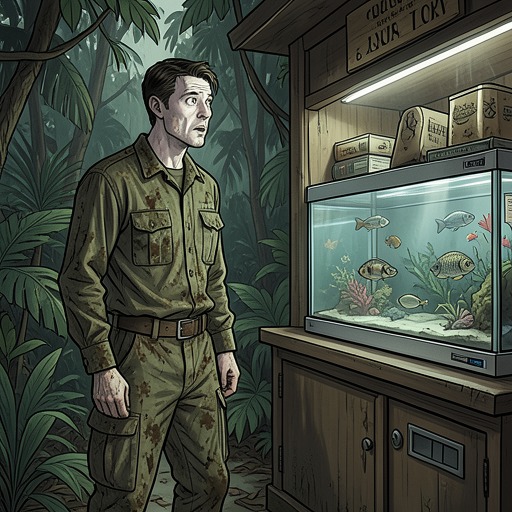
The episode draws its meaning from a story Shugs had told about Darky Gardiner. In the camp, Darky had become fixated on the fish swimming in Nikitaris’s tank. He imagined returning to the shop, buying the fish or taking them by whatever means necessary, and putting them back in the sea. He regarded the fish as fellow prisoners, confined where they did not belong. The plan gave the men a small, concrete image of freedom amid a life organized around forced labor and deprivation.
That deprivation had been established from the prisoners’ arrival. Evans’ J Force had been transported in closed steel wagons, with twenty-seven men crowded into each; their five-day journey brought no food, and three men died before they reached Ban Pong. Later, as the monsoon set in, food dwindled and the Speedo removed rest days, increased quotas, and lengthened shifts. Prisoners were made to clear jungle, break rock, and carry railway materials with little beyond hand tools and their exhausted bodies. In that setting, Darky’s attention to fish in a tank was more than a passing distraction: it turned confinement into something visible and suggested a release the prisoners could imagine, even when they could not secure it for themselves.
The Night at the Shop
The men do not set out with a plan to repair the past. Near midnight, they leave a pub after being thrown out, drunk and with nothing better to do. In Hobart’s cold, unsettled spring weather, they walk up Elizabeth Street behind Gallipoli von Kessler. The visit they had imagined bears little resemblance to what they find. Nikitaris’s Fish Shop is shut; its doors are locked, its interior dark, and only the lights over the long front tank remain on. The street is empty, and the fish—flatheads, a trumpeter, two silver trevally, and a leatherjacket—circle behind the glass.
The men stand outside, shifting against the cold and looking in. Sheephead Morton observes that the fish do not appear unhappy. Jimmy answers by comparing their apparent calm with the way prisoners might have looked in the camp. The exchange gives the fish a double significance: they are living creatures in a tank, but also a mirror through which the former prisoners measure their own captivity. The men have returned to civilian streets, yet that return has not made the camp experience disappear.
Jimmy’s response is less reflective than sudden. He feels like an appearance with nothing inside and wishes he could feel something, though wishing does not make feeling return. He picks up a rock, rolls it in his palm, and throws it at the shop window. The glass cracks gradually rather than collapsing at once. That pause separates impulse from consequence: the window begins to give way, and the men then follow Jimmy’s action, throwing more rocks until the opening is large enough for them to enter.
An Improvised Release
Inside, Gallipoli von Kessler improvises a way to remove the fish. He takes a chip fryer and uses it to scoop them from the tank. After several mishaps, the men have gathered the fish in two mop buckets. They carry the buckets back down to the docks, trying not to spill the water as they walk. The practical details matter: this is no organized rescue, but a makeshift effort assembled from the shop’s equipment and whatever containers the men can find.
At Constitution Dock, boats rock in the harbour. Sheephead Morton bends over one bucket and calls out that the fish are free, then tips it. The others release the fish from the second bucket. The action completes the promise Darky had voiced in the camp: the fish leave the tank and enter the water. For the men, the act briefly reverses the direction of captivity. They cannot undo what was done to them, but they can carry out a specific gesture that answers one of their comrade’s remembered wishes.
The release does not erase the difference between the fish’s escape and the men’s own return. Its meaning rests precisely in that limit. The fish can be tipped into the harbour; the prisoners’ lost time and disrupted lives cannot be restored by a single act. The episode makes their concern for the fish an expression of mutual recognition as well as an improvised kindness: Darky had seen the tank as a place of confinement, and his friends now act on that perception together.
The Morning After
The next evening, at the Hope and Anchor, the men tell the story with gusto, but their pleasure is shadowed by growing shame. Jimmy says they should visit Nikitaris and make amends for the broken window. The shop’s window has already been replaced, although it has not yet been painted. The episode thus ends not with an account of completed restitution, but with Jimmy’s insistence that their action has consequences for someone beyond the group and should be answered for.
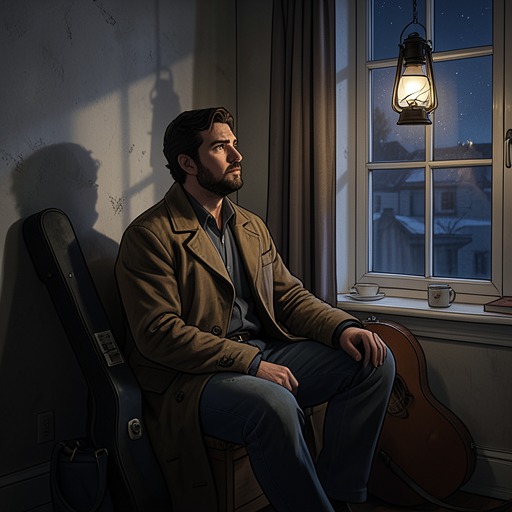
That insistence follows the numbness established before the excursion. Jimmy’s hopes of becoming a musician have not come to fruition; he works as a storeman at the zinc works, and the music he loves seems to belong to a world that is disappearing. He feels estranged from his own life and unable to set matters right. At the shop, the rock gives that accumulated dislocation an abrupt physical outlet; the following night, his proposal to face Nikitaris turns the men from the release of the fish toward responsibility for the damage they caused. The episode holds both impulses together: a comrade’s promise fulfilled, and the beginning of an effort to account for the cost of fulfilling it.